5 Energy Market Realities in 2026


This article has been supplied.
By: David McDonald - CEO at SolarAfrica
If you ever find yourself sitting around a C-suite industry dinner table, you’ll soon notice that since the recent-ish abolition of loadshedding (long may it last!), the energy conversation is generally filled with optimism, dominated by big ideas and peppered with bold timelines.
But if you’re on the ground, you know that the market moves in its own time, and in a far more practical way. The realities shaping 2026 aren’t predictions or policy aspirations, but they’re already playing out in how projects are financed, how municipalities procure power, and how businesses think about energy risk.
Here are five energy market truths that will inform how we, as an industry, operate in 2026.
The wholesale market still hinges on Eskom – and that hasn’t changed
Over the past year, there has been a great deal of talk around the South African Wholesale Electricity Market (SAWEM), coupled with words such as “ready”, “milestones” and “imminent”.
But while it might sound, on paper, like we’re about to press play, the reality is that without all stakeholders’ participation, a wholesale market won’t function. Currently, while Eskom supports the concept of an open market, it still appears to be hedging its bets by building and controlling its own virtual wheeling platform. And private off-takers and Independent Power Producers (IPPs) will continue to align themselves – at least in the short term – with the state-owned entity because it’s where bankability exists.
This is significant because key stakeholders such as developers, customers and banks are watching and responding to what exists today. Projects are being financed and built using Eskom-approved structures, and nobody is holding projects back waiting for a market that may or may not arrive on schedule.
I believe that a wholesale market is in the best interests of South Africa’s energy landscape, and that it will still play a role in future. But in 2026, most private power activity continues to sit outside that debate – for now, at least.
Municipalities buying power directly becomes the path of least resistance
While 2025 has proved that wheeling is viable at scale and offers a multitude of advantages, many municipalities are choosing a more straightforward route: buying power directly from IPPs.
In the Western Cape, Swartland and George are two recent examples of municipalities that have stated their intention to source electricity directly from power producers, while in KwaZulu-Natal, eThekwini Municipality was the first SA metro to secure ministerial approval to buy significant capacity from IPPs.
For them, wheeling brings administrative and financial complexity, while direct procurement – on the other hand – is easier to implement and increasingly easier to finance. Moreover, changes to Eskom’s Electricity Supply Agreement have made these structures more rigorous and, in some cases, more challenging for municipalities to navigate.
As a result, expect the market to become even more fragmented in 2026.
Energy decisions move out of operations and into the balance sheet
In 2026, energy is no longer treated as solely an operational cost; for many large users, it now moves onto the balance sheet and into the risk management function.
Electricity is one of the few major costs businesses can actually fix over a long period, which is why energy conversations are increasingly happening with finance and risk teams (not just the sustainability and engineering people).
We see this clearly in industries such as mining. Electricity is seen as one of mining’s biggest input costs, and in some cases, uncertainty around future pricing is delaying capital investment. While things like commodity pricing and market volatility cannot be controlled, a mine does have control over their energy strategy, which is where partners who can structure blended energy solutions have an increasingly vital role to play in 2026.
Fixed and capacity charges start to change the landscape
As self-generation increases, municipalities and Eskom are increasingly reliant on fixed and capacity charges to protect revenue, which changes the landscape significantly. In future, it is likely that capacity charges will increase at a far faster rate than consumption charges.
What does this mean for 2026? Expect major players in the energy industry, such as SolarAfrica, to innovate and get smarter about managing peak demand and capacity exposure in a bid to reduce costs for our customers. Think batteries, hybrid supply models, diversified energy stacks and the ability to supply power outside standard solar hours to become more prevalent.
Wheeling works – but financing is still catching up
In 2025, we proved that wheeling works - and in the case of SolarAfrica’s SunCentral, first power is expected to come online later this year. However, in 2026 we’re seeing more traders enter the energy trading pool, more off-takers and more complex structures. These are putting pressure on banks that are still geared for simpler, single-buyer deals. Reaching financial close on these projects is already taking longer than developers would like, and this trend is set to continue.
But this won’t be the case forever: as more multi-tenant projects come online, banks will have access to better data, meaning that risk will become easier to price.
For now, you can expect the length and rigidity of the financial close process to give many developers a few grey hairs.
Article Enquiry
Email Article
Save Article
Feedback
To advertise email advertising@creamermedia.co.za or click here


Projects
Latest Multimedia
Latest News

Showroom
Sulzer South Africa, established in 1922, partners with critical industries like power, oil & gas, water, mining, and chemicals to boost...
VISIT SHOWROOM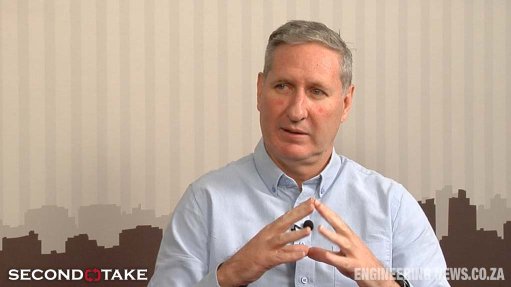

Press Office
Announcements
What's On
Subscribe to improve your user experience...
Option 1 (equivalent of R125 a month):
Receive a weekly copy of Creamer Media's Engineering News & Mining Weekly magazine
(print copy for those in South Africa and e-magazine for those outside of South Africa)
Receive daily email newsletters
Access to full search results
Access archive of magazine back copies
Access to Projects in Progress
Access to ONE Research Report of your choice in PDF format
Option 2 (equivalent of R375 a month):
All benefits from Option 1
PLUS
Access to Creamer Media's Research Channel Africa for ALL Research Reports, in PDF format, on various industrial and mining sectors
including Electricity; Water; Energy Transition; Hydrogen; Roads, Rail and Ports; Coal; Gold; Platinum; Battery Metals; etc.
Already a subscriber?
Forgotten your password?
Receive weekly copy of Creamer Media's Engineering News & Mining Weekly magazine (print copy for those in South Africa and e-magazine for those outside of South Africa)
➕
Recieve daily email newsletters
➕
Access to full search results
➕
Access archive of magazine back copies
➕
Access to Projects in Progress
➕
Access to ONE Research Report of your choice in PDF format
RESEARCH CHANNEL AFRICA
R4500 (equivalent of R375 a month)
SUBSCRIBEAll benefits from Option 1
➕
Access to Creamer Media's Research Channel Africa for ALL Research Reports on various industrial and mining sectors, in PDF format, including on:
Electricity
➕
Water
➕
Energy Transition
➕
Hydrogen
➕
Roads, Rail and Ports
➕
Coal
➕
Gold
➕
Platinum
➕
Battery Metals
➕
etc.
Receive all benefits from Option 1 or Option 2 delivered to numerous people at your company
➕
Multiple User names and Passwords for simultaneous log-ins
➕
Intranet integration access to all in your organisation